
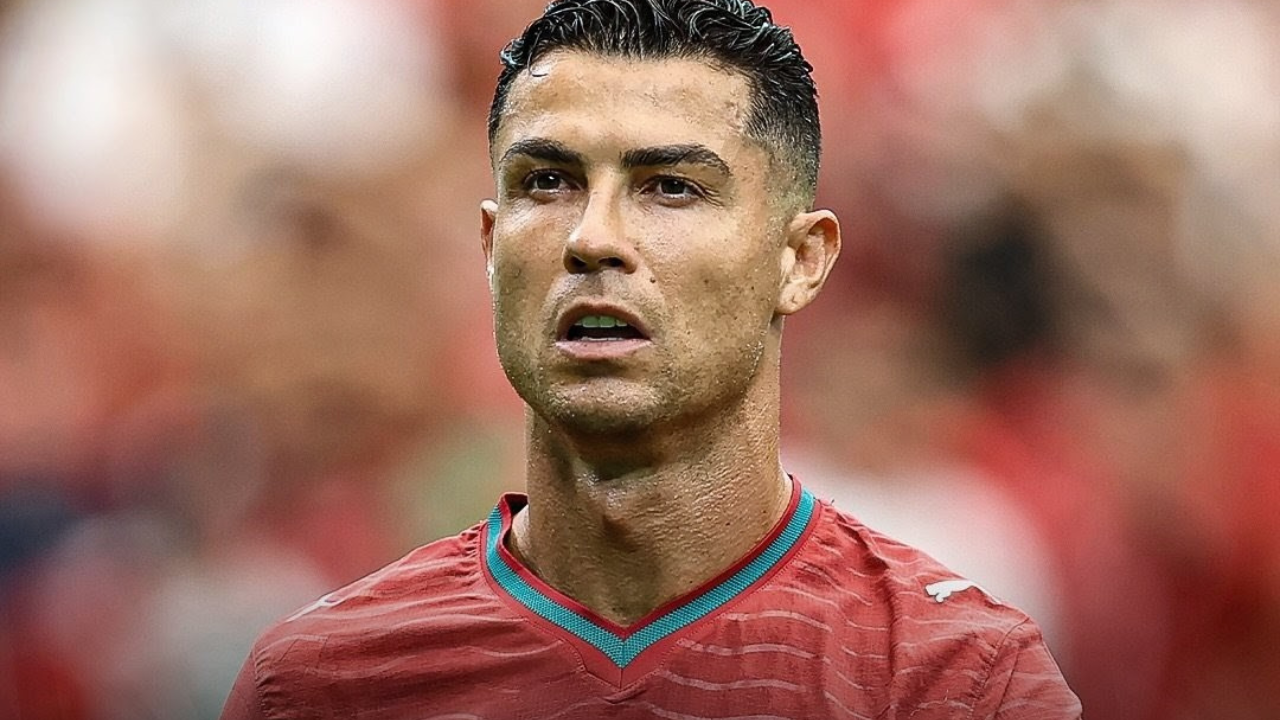
Portugal vs DR Congo final score was Portugal 1-1 DR Congo at the World Cup 2026. Despite 769 passes and 75% possession, Ronaldo received only 19-20 completed passes and touched the ball fewer times than DR Congo’s own goalkeeper. Here is why.
Published: June 18, 2026 | Author: Hemim SK
Portugal vs DR Congo result: Portugal 1-1 DR Congo.
Here is a number that does not make sense at first glance. Portugal completed 769 passes against DR Congo on Wednesday at NRG Stadium in Houston. They had 75% possession. Their pass accuracy was 93%. And yet Cristiano Ronaldo — the man wearing the captain’s armband, the most decorated player in the history of the sport — completed only 19 of those passes and touched the ball roughly 25 times across the full 90 minutes.
To put that in context: DR Congo’s own goalkeeper, Lionel Mpasi Nzau, touched the ball more times than Ronaldo did. According to WhoScored data, no outfield player who completed 90 minutes anywhere at this World Cup so far has registered fewer touches than Ronaldo managed in Portugal’s opening match. Bernardo Silva, who was substituted at half-time, still finished with more touches than Ronaldo despite playing half the minutes.
So the obvious question — the one we have been asking ourselves while watching this match — is simple. With this much of the ball, with arguably the best supporting midfield Portugal have ever assembled around him, why did their most famous player barely get to touch it?
Portugal vs DR Congo — Final Score and Match Facts
Final Score: Portugal 1-1 DR Congo
Date: Wednesday June 17, 2026
Venue: Houston Stadium (NRG Stadium), Houston, Texas
Attendance: 68,777 (overwhelmingly Portugal supporters)
Group: K
Goals:
Portugal — J. Neves 6′
DR Congo — Y. Wissa 45+5′
Match Stats:
Possession: Portugal 75% — DR Congo 25%
Total Passes: Portugal 769 — DR Congo 222
Pass Accuracy: Portugal 93% — DR Congo 81%
Shots: Portugal 7 — DR Congo 8
Shots on Target: Portugal 1 — DR Congo 2
Expected Goals (xG): Portugal 0.64 — DR Congo 0.82
How the Match Unfolded
Portugal could not have asked for a better start. In the first six minutes alone they completed 84 passes to DR Congo’s 12, moving the ball with the kind of fluency that suggested a routine, comfortable victory was coming. Joao Neves capped that opening sequence with a well-timed header from a Pedro Neto cross in the 6th minute. Portugal 1-0. Everything appeared to be going exactly to plan.
Then something shifted. DR Congo — playing in just their second ever World Cup appearance, and their first since 1974 when they competed as Zaire — settled into the game and grew increasingly comfortable. Yoane Wissa equalised from a corner kick in first-half stoppage time, scoring DR Congo’s first ever World Cup goal in the process. A genuinely historic moment for Congolese football, 52 years in the making.
From that point on, Portugal’s attacking pattern changed almost entirely. They managed only six more shot attempts across the remaining 80-plus minutes. Their overall shot total of seven for the match is, remarkably, Portugal’s lowest in any World Cup match since Opta’s records began in 1966. DR Congo, despite having only a quarter of the possession, actually finished with more shots (8 to 7), more shots on target (2 to 1) and a higher expected goals value (0.82 to 0.64) than Portugal did.
Ronaldo himself came closest to a winner in the 68th and 73rd minutes, missing wide right on both occasions and visibly shaking his head in frustration each time. Bruno Fernandes also had a great chance in the 90th minute, also dragging his shot wide right. Joao Cancelo thought he had given Portugal the lead with a bicycle kick in the 55th minute, but it was ruled offside.
Full time: Portugal 1-1 DR Congo.
Solving the Paradox — Where Did All Those Passes Actually Go?
This is the part of the match that deserves real scrutiny, because the raw numbers genuinely look contradictory until you understand what changed.
Roberto Martinez gave the clearest explanation himself after the final whistle, and it is worth reading carefully because it answers exactly the question so many fans were asking while watching. “It became a different game after we scored the first goal,” Martinez said. “Until then, our attacking patterns were getting us into the final third. We had very good connections between our inside play and our play out wide. But once Congo equalised, it became a different match. The decision-making changed.”
In other words: Portugal’s first six minutes were not just productive in terms of passing volume, they were productive in terms of where those passes went — directly toward goal, into the final third, combining with width and purpose. After Wissa’s equaliser, Portugal kept the ball just as much, but the destination of those 769 passes shifted toward safer, more lateral and deeper areas of the pitch rather than the zones that actually create chances. Possession stayed high. Penetration collapsed.
This is the central distinction that explains your observation, Hemim. Portugal did not stop passing. They stopped passing into the right spaces. And Ronaldo, as a player who now needs the ball delivered to very specific zones rather than one who creates his own opportunities through movement, was the player most affected by that shift.
Why Ronaldo Specifically Got Starved of the Ball
Martinez addressed this directly too, and his explanation is the single most useful piece of information for understanding what is actually happening with Ronaldo at 41 years old. “After the first goal, we didn’t reach the final third at the level we needed in order to provide service to the striker and make use of his movements,” Martinez said. “The striker needs to stay close to goal, but we need to find the spaces and get the ball into those positions.”
Thierry Henry and Zlatan Ibrahimovic, analysing the match for Fox Sports, made the same point from a different angle. Henry was specific about the 68th minute chance, arguing Ronaldo should have laid the ball off to Bruno Fernandes rather than shooting himself: “The team needs to score, not you need to score.” But Henry’s more important observation was about Ronaldo’s movement, not his decision-making in the box: “He’s not going to run into the channel. He’s not going to stretch a team. You need to feed him in the box in order for him to score goals.”
This is the mechanism behind the entire statistical anomaly. In his prime, Ronaldo created his own service by sprinting into channels and behind defensive lines, dragging defenders out of position and generating space through pure movement. At 41, that specific physical capacity is gone. He now has to be fed directly, in central, dangerous positions, by teammates who are themselves trying to break down a deep, disciplined Congolese defensive line that gave Portugal almost no central space to work with after the equaliser.
The result is a vicious cycle. Portugal’s elite midfielders — Bernardo Silva, Vitinha, Bruno Fernandes, Joao Neves — were not failing to “play as midfielders,” as you put it. Vitinha completed 93% of his passes. Bernardo Silva and Bruno Fernandes were both heavily involved in build-up play. They were playing as midfielders extremely well. The issue was that their excellent build-up play kept getting absorbed in deeper and wider zones, rather than being threaded through to the one player whose entire remaining value depends on receiving the ball in a very narrow band of central, advanced positions. Sky Sports’ analysis put it bluntly: Ronaldo “appeared to just be taking up space,” and his teammates persisted “unselfishly” trying to find him “at all costs” — at times even passing up better chances themselves to do so.
The Bigger Pattern — This Is Not a One-Match Problem
Tonight’s performance extends a pattern that has now been visible across three consecutive major tournaments. Since scoring a penalty against Ghana in Portugal’s opening match of the 2022 World Cup, Ronaldo has gone ten consecutive matches across the 2022 World Cup, Euro 2024 and now the opening match of 2026 without scoring in a major tournament. He finished the DR Congo match without a single shot on target, the sixth time this has happened to him at a World Cup, and his tournament scoreless run is now five games long.
There is historical precedent for what happens next when this pattern emerges. After a similarly underwhelming group stage in Qatar four years ago, then-manager Fernando Santos made the decision to drop Ronaldo for the Round of 16 match against Switzerland — and his replacement, Goncalo Ramos, scored a hat-trick. Whether Martinez considers a similar adjustment remains to be seen, but the question is now firmly on the table heading into Portugal’s remaining group matches.
Two Genuinely Different Explanations, Both Partly True
To directly answer the framing of your question: there is no evidence Portugal’s players or coaching staff “don’t want” Ronaldo in the squad. The opposite is true — his teammates are, by every account from the match, going out of their way to find him, sometimes to their own tactical detriment. The issue is not exclusion. It is a service problem layered on top of a movement problem, both stemming from the simple fact that Ronaldo at 41 needs a different kind of supply than he did at 30, and Portugal have not yet consistently solved how to deliver it once a match stops going entirely their way.
Need To Know
What was the Portugal vs DR Congo final score?
Portugal vs DR Congo final score was Portugal 1-1 DR Congo at the FIFA World Cup 2026, played at Houston Stadium (NRG Stadium) on June 17.
How many passes did Ronaldo receive against DR Congo?
Cristiano Ronaldo completed only 19 passes and touched the ball approximately 25 times during the match against DR Congo, despite Portugal completing 769 total passes as a team.
Did Ronaldo touch the ball less than the DR Congo goalkeeper?
Yes — Ronaldo’s touch count of approximately 25-29 (depending on data source) was fewer than DR Congo goalkeeper Lionel Mpasi Nzau’s touches, and was the second fewest of any Portugal starter, ahead of only Bernardo Silva, who was substituted at half-time.
Why didn’t Portugal’s midfielders create more chances for Ronaldo?
According to manager Roberto Martinez, Portugal’s attacking patterns and ball progression into the final third were excellent in the opening six minutes but changed significantly after DR Congo’s equaliser, meaning possession remained high but the ball was not consistently delivered into the specific zones Ronaldo needed.
Is Ronaldo in decline at the 2026 World Cup?
Ronaldo’s scoreless run in major tournaments has now extended to ten consecutive matches across the 2022 World Cup, Euro 2024 and the 2026 World Cup opener. Pundits including Thierry Henry have noted he no longer makes the off-the-ball runs into channels that previously created his own scoring chances.
Did Portugal create more chances than DR Congo?
No — despite having 75% possession, Portugal actually had fewer shots (7 to 8), fewer shots on target (1 to 2) and a lower expected goals value (0.64 to 0.82) than DR Congo.
Has Ronaldo ever been dropped at a World Cup before?
Yes — at the 2022 World Cup, manager Fernando Santos dropped Ronaldo for the Round of 16 match against Switzerland after a similarly underwhelming group stage. His replacement, Goncalo Ramos, scored a hat-trick in that match.
Conclusion
Portugal vs DR Congo result: Portugal 1-1 DR Congo. A historic point for Congolese football, 52 years after their last World Cup appearance. A deeply uncomfortable evening for Portugal, who managed their lowest shot total in a World Cup match since 1966 despite dominating possession almost completely.
Related: Portugal World Cup 2026 Schedule — Ronaldo’s Last World Cup Guide
Related: France vs Senegal World Cup 2026 Preview: African Champions vs World Cup Favourites
Should Roberto Martinez change Portugal’s approach to feed Ronaldo better, or is it time to build the team’s attack around someone else entirely? Tell us in the comments