
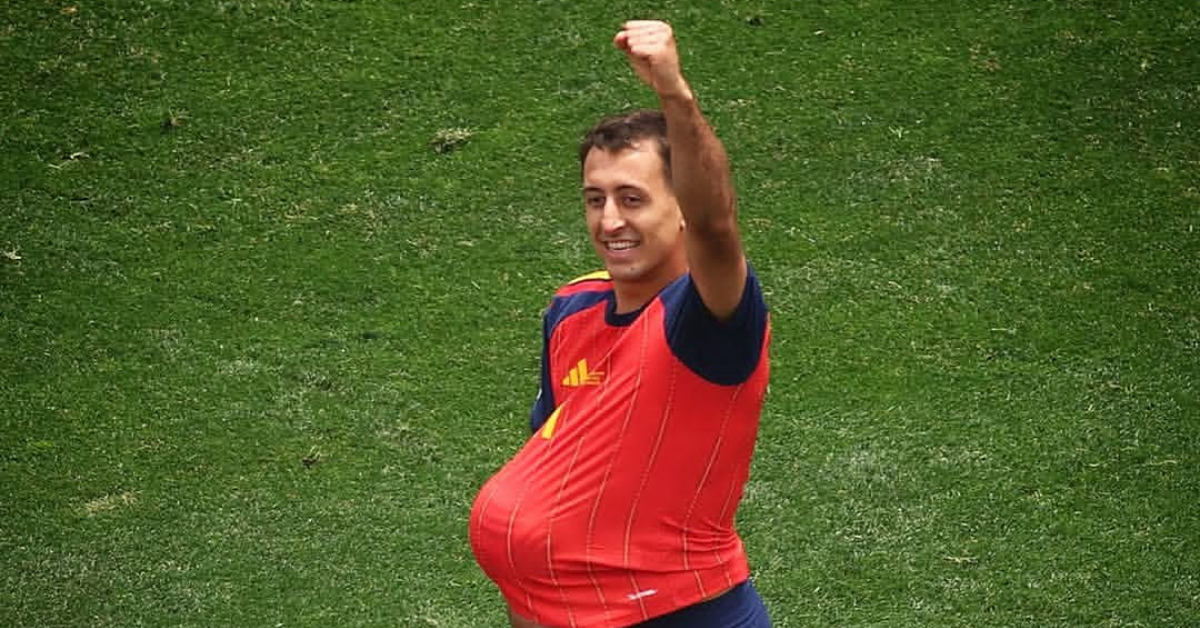
Spain Didn’t Just Beat Austria — They Sent a Warning to Every Team Left in This Tournament


Spain crushed Austria 3-0 in the FIFA World Cup 2026 Round of 32 at SoFi Stadium in Los Angeles, with Mikel Oyarzabal scoring a brace and Pedro Porro heading his first international goal. Lamine Yamal set a 60-year record and Unai Simon broke a 36-year World Cup clean sheet record. Full match report

FIFA World Cup 2026 | Round of 32 | Author: Hemim Sk | SoFi Stadium (Los Angeles Stadium), Inglewood, California
Spain 3–0 Austria
Goals: M. Oyarzabal 36′, 89′ | P. Porro 66′

Match played July 2, 2026 at SoFi Stadium, Inglewood, California.


Spain head coach Luis de la Fuente used the phrase “almost perfect” afterward. He was being modest.

This was Spain at their clinical, ruthless, suffocating best — a performance that dismantled Austria without ever really breaking sweat, answered every question about their knockout-stage credentials, and sent a message so clear it should make the other half of the draw uncomfortable.

Austria managed zero shots on target. Zero. In a World Cup knockout match, against one of the finest defensive structures in world football, Ralf Rangnick’s side couldn’t force a single save from Unai Simón in 90 minutes. The last time a team did that in a World Cup knockout game was Germany in the 2014 final against Argentina. The standard of this Spain performance was that high.


Lamine Yamal Sets the Tone in Minute One

Before the stadium had fully settled, Lamine Yamal was already causing chaos. In the opening minute — literally the first minute — the 18-year-old Barcelona forward picked up the ball at the edge of the area, spun his marker and fired a shot that Schlager did well to hold. A statement of intent delivered before most fans had found their seats.

That opening caused an extraordinary piece of social media activity. Within an hour of the match beginning, the statistic was confirmed and circulating widely: Yamal had become the youngest player since 1966 to record both 10+ touches in the opposition box (14 for the match) and 10+ dribbles (10 completed) in a single FIFA World Cup match. At 18 years old, in a knockout game, he was producing numbers nobody has managed in six decades of World Cup football.

And all of it without scoring. The assists, the dribbles, the danger — it arrived as a constant wave that Austria simply could not contain, and his direct contribution to both the second and third goals underlined that his stat line alone doesn’t capture the full picture.


Oyarzabal Breaks the Deadlock (36′)

Spain had been dominant without breaking through — Marc Cucurella thought he had scored from a corner, wheeled away in celebration and was denied by a soft foul call on Schlager that infuriated La Roja — until the 36th minute delivered the moment of quality the game had been building toward.

Cucurella, relentless down the left all afternoon, played a low ball into the box. Mikel Oyarzabal met it with a first-time finish steered precisely into the corner. Spain 1-0 Austria, half-time approaching, and the task already looking enormous for Rangnick’s side.

It was Oyarzabal’s third goal of this World Cup, making him Spain’s top scorer at the tournament and confirming him as the decisive attacking force in a side that doesn’t always produce an obvious individual star.


Austria’s Brief Resistance Ends With Porro’s Header (66′)

Rangnick threw on substitutes at half-time, including Sasa Kalajdzic — the stoppage-time hero whose goal against Algeria had dragged Austria into the knockout rounds in the first place. For a brief second-half spell, Austria pushed and probed, with Stefan Posch heading over from a Sabitzer cross that deserved better.

But Spain’s defensive structure absorbed every Austrian attack without the slightest alarm. Pau Cubarsí and Aymeric Laporte were imperious. Rodri and Pedri controlled tempo so completely that moments of genuine Austrian threat were almost non-existent.

The second goal arrived in the 66th minute and effectively ended the contest. Álex Baena swung a cross from the left and Pedro Porro, arriving late at the far post, nodded in with precision. It was Porro’s first-ever goal for Spain in his 20th international appearance — and coming on the biggest stage of his career, in Los Angeles, in a World Cup knockout match, it will remain one of his defining moments in football.

David Alaba blocked a Yamal effort on the goal line shortly after — the outstanding individual intervention of the match — but it was the intervention of a desperate side rather than a dominant one.


Oyarzabal Seals It in Style (89′)

In the 89th minute, Cucurella delivered again from the left. Oyarzabal met it with a clinical slide and Spain were 3-0 up with minutes to spare. The brace made Oyarzabal the first Spain player to score twice in a World Cup knockout match since Emilio Butragueño against Denmark at Mexico 1986 — a 40-year wait for a Spaniard to produce that on that stage.

De la Fuente was ecstatic on the touchline. Spain’s players celebrated with the knowledge that the performance had matched the scoreline. “We have to live up to high expectations,” the coach said afterward. “We knew it would be an important match. In every aspect, we were almost perfect.”


Unai Simón’s Record Nobody Saw Coming

In the middle of Spain’s attacking brilliance, their goalkeeper quietly made history.

With Austria failing to register a single shot on target, Simón extended his run without conceding in World Cup football to 519 minutes — breaking Walter Zenga’s all-time record of 517 minutes, set with Italy during the 1990 World Cup. That run stretches back to a 0-0 draw with Morocco in Qatar in December 2022, through Spain’s entire 2026 group stage campaign (four group matches without conceding a goal) and now into the knockout rounds.

Spain have not conceded a goal at this World Cup. Five matches. Zero goals against. And they didn’t allow a single shot on target against Austria — the first time any team has managed that in a World Cup knockout match since Germany in the 2014 final.


Match Stats

Spain 🇪🇸 Austria 🇦🇹
Goals 3 (Oyarzabal x2, Porro) 0
Shots on Target Multiple 0
Unai Simón WC minutes without conceding 519 (World record)
Yamal dribbles completed 10
Yamal box touches 14
Spain unbeaten run (competitive) 34 matches

Round of 16: Spain vs Portugal or Croatia — Dallas, Monday July 6

Spain will face the winner of Thursday night’s Portugal vs Croatia Round of 32 match in Dallas on Monday, July 6. It is a fixture that feels enormous regardless of who emerges from Toronto.

Portugal, with Ronaldo, Leão, Bruno Fernandes and Pedro Neto, carry the more individually gifted attack. Croatia, with Modric conducting from midfield at 40 years old, carry the tournament pedigree and the psychological resilience of a side that has reached the semi-finals and final in the last two editions.

Either way, Spain will be favourites. They are the reigning European champions, 34 competitive matches unbeaten, yet to concede a goal at this World Cup, and producing a performance level that now legitimately places them among the short-price favourites to win the entire tournament.

Luis de la Fuente’s side didn’t just beat Austria. They sent a warning to everyone still left standing.


NEED TO KNOW

Q: What was the score in Spain vs Austria?
A: Spain 3-0 Austria. Goals from Mikel Oyarzabal (36′, 89′) and Pedro Porro (66′).

Q: Who scored for Spain against Austria?
A: Mikel Oyarzabal with a brace (36′ and 89′) and Pedro Porro with a header (66′) — his first international goal in his 20th cap.

Q: Did Lamine Yamal score?
A: No, but he was the game’s outstanding creative force — recording 10 completed dribbles and 14 touches in the opposition box, the most by any player in a World Cup match since 1966.

Q: What record did Unai Simón break?
A: He extended his World Cup run without conceding to 519 minutes, breaking Italy’s Walter Zenga who held the previous record of 517 minutes since 1990.

Q: Who do Spain play in the Round of 16?
A: The winner of Portugal vs Croatia, on Monday July 6 in Dallas.

Q: When was Spain’s last World Cup knockout win before this?
A: Their 2010 World Cup triumph in South Africa — making this their first knockout win since lifting the trophy 16 years ago.

Q: Is Spain the favourite to win the 2026 World Cup?
A: Based on their performances so far — unbeaten in 34 competitive matches, zero goals conceded at this tournament, and a squad with elite depth throughout — they are among the clear tournament favourites alongside France and Argentina.

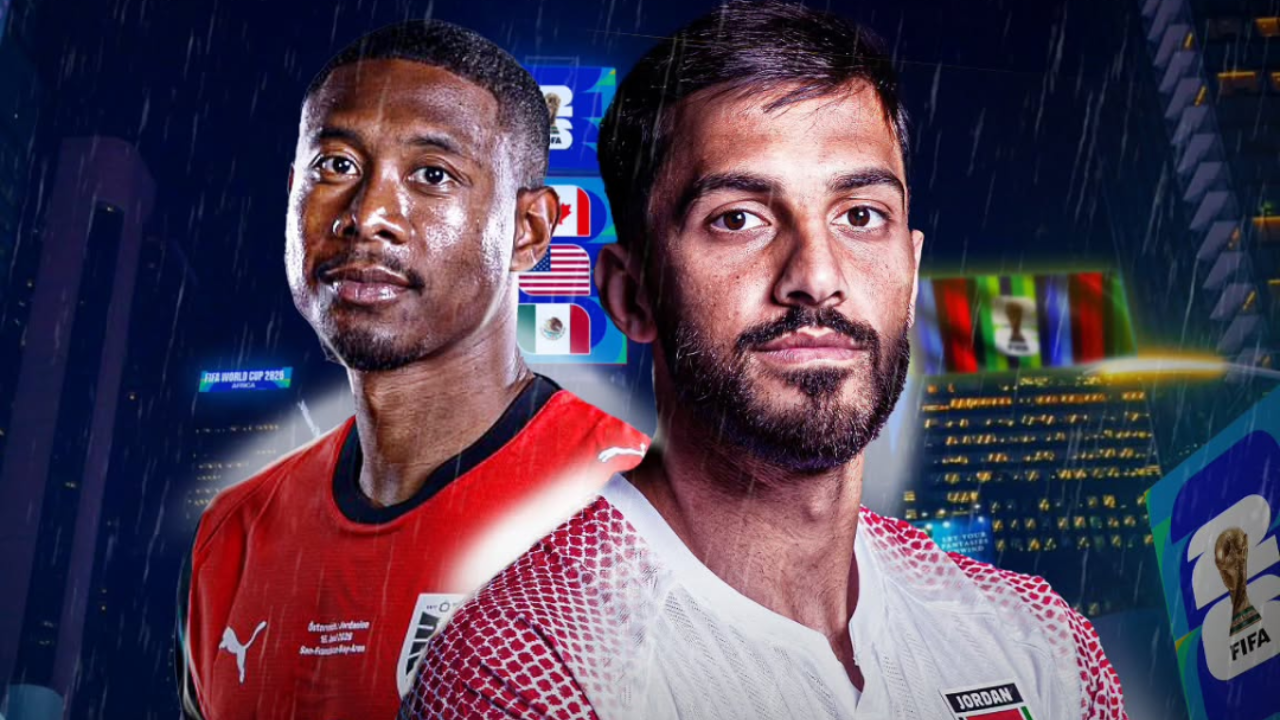
 

Read Next : USA vs Bosnia Lineup Confirmed: Freese Starts in Goal Over Turner — Pulisic and Balogun Lead USMNT Into Their First Home World Cup Knockout Match

38 Years Old, 18 World Cup Goals, and Tears After the First One: The Night Messi Became Football’s Greatest Ever


Lionel Messi scored his 17th and 18th World Cup goals to break Miroslav Klose’s all-time record as Argentina beat Austria 2-0 in Dallas. Full match report, goal details, reaction and what it means for football history

FIFA World Cup 2026 | Group J | Dallas Stadium (AT&T Stadium), Arlington, Texas
Argentina 2–0 Austria
Goals: L. Messi 38′, 90+5′

Published: June 22, 2026 | Author: Hemim SK


He missed a penalty first. He always makes you wait.

Nine minutes in, Lautaro Martínez won a spot kick after being pulled back in the box. The moment Messi placed the ball on the spot, 80,000 people inside Dallas Stadium held their breath, because they all understood exactly what goal number 17 would mean. He stuttered in his run-up. The ball went wide right. Silence.

Twenty-nine minutes later, Messi received a low pass at the edge of the box, shifted his weight onto his left foot, and swept the ball into the bottom-left corner. Dallas Stadium exploded.

Goal number 17. The record. All to himself. The greatest scorer in men’s World Cup history.

And then Lionel Messi, at 38 years old, two days before his birthday, with an ailing father undergoing medical treatment back home in Argentina — broke down in tears.

“My tears after the first goal? I’ve had some tough days. It wasn’t related to soccer,” Messi admitted afterward. “Those feelings were because of that. I thank my teammates, the coaching staff and the delegation for helping me.”

He then scored a second one in stoppage time, because that’s what Messi does when the story is already complete — he adds another chapter.


The Wait, The Penalty, The Record

Argentina had every reason to be nervous heading into this match against Ralf Rangnick’s Austria. Their opener against Algeria — a 3-0 win featuring a Messi hat-trick — had already pulled him level with Klose on 16 goals, and the mathematics of the record were all anyone in the footballing world could talk about.

What nobody planned for was a missed penalty. And what nobody expected was that missing it would make the actual record-breaking moment feel even more cinematic.

After the spot-kick went wide, Austria grew into the match. Rangnick’s side, built around Marcel Sabitzer’s craft and a compact pressing system, made Argentina genuinely uncomfortable for long stretches of the first half. Emiliano “Dibu” Martínez made several crucial interventions, and for all Argentina’s possession, the clear-cut chances were scarce.

Then came the 38th minute. Thiago Almada let Facundo Medina’s pass go through to Messi’s left foot at the top of the box. One touch. One look. One swing. Bottom-left corner. 1-0.

Argentina’s Lionel Messi made the record goal, his 17th, during the first half of Monday’s game against Austria.

The scenes that followed were unlike anything seen at a World Cup in years. Messi’s teammates engulfed him before he could even reach the corner flag, Lautaro first, then Enzo Fernández, then the entire squad pouring off the bench. Messi stood in the middle of it all, head in hands, tears rolling down his face, the weight of two decades of World Cup history resting visibly on his shoulders.


The Second Goal — Because 17 Was Never Going to Be Enough (90+5′)

With Argentina 1-0 up and Austria pressing for an equalizer in the final minutes, the match felt unresolved, tense. Then, deep into stoppage time, Messi pushed through the Austrian backline inside the box, saw Schlager turn away his first effort, and slotted home the rebound.

He followed that with his 18th goal to seal a 2-0 victory against Austria and take his 2026 tournament tally to five. He now holds the outright scoring record, as well as extending the record for most FIFA World Cup appearances in his 28th match.

18 goals. Five at this tournament alone. Argentina 2-0 Austria. Done.


What the Numbers Actually Mean

The scale of what Messi has achieved across six World Cups deserves to be laid out clearly, because the numbers are almost incomprehensible:

Rank Player Country Goals
1 🔥 Lionel Messi Argentina 18
2 Miroslav Klose Germany 16
3 Ronaldo (R9) Brazil 15
4 Kylian Mbappé France 14
5 Gerd Müller Germany 14

With 18 World Cup goals, 201 international caps and a record sixth World Cup appearance, Messi continues to deliver no matter the obstacles — he also becomes the first men’s player ever to reach 18 goals at the global football tournament.

By scoring his 18th goal, he surpassed Brazilian great Marta, who has 17 goals in FIFA Women’s World Cups, to become the greatest World Cup goalscorer, male or female.

His journey to this moment stretches back exactly 20 years. Messi scored his first World Cup goal on June 16, 2006, at 18 years old, netting a second-half strike against Serbia and Montenegro in Germany. Twenty years later, almost to the day, he opened the 2026 tournament with a hat-trick against Algeria.


The Personal Backdrop That Made This Moment Different

Records at World Cups usually come wrapped in pure football storylines. This one arrived carrying something heavier.

The goal comes amid a tough week for Messi and his family. Jorge Messi was set to undergo medical treatment for an undisclosed illness last week. Messi’s family asked for “humanity” from the media.

His tears after the record-breaking goal were not tears of football joy. He said so himself. They were something deeper — the release of a man carrying more than a football match on his shoulders, surrounded by teammates who clearly understood that and made sure he didn’t carry it alone.

“Beyond anything I’m so happy for the win,” Messi said. “It was huge, tough and difficult. It would allow us to be relaxed to what’s ahead. All matches in this World Cup are very even, very intense. I’m enjoying this moment and craving to enjoy with my teammates.”


The Race Is Still On — And It’s Coming From France

The record may not stay unchallenged for long. Kylian Mbappé, who scored twice in France’s opening win over Senegal, now sits on 14 World Cup goals at 27 years old — almost certainly with at least one more World Cup ahead of him.

As for how long Messi could hold this record, it will depend on the form of Kylian Mbappé, who entered this tournament with 14 goals. The Frenchman already scored twice in the opening win against Senegal, and at age 27, is likely to have at least one more World Cup after this one.

But for tonight, in Dallas, none of that matters. Tonight belongs entirely to Messi, to Argentina, and to a record that waited 20 years and six World Cups to arrive.


Group J Standings After Matchday 2

Team P Pts
1 Argentina 🇦🇷 2 6
2 Algeria 🇩🇿 1 3
3 Austria 🇦🇹 2 0
4 Jordan 🇯🇴 1 0

Argentina are through to the knockout rounds. Messi gets his birthday — June 24 — knowing the record is already his.


Need To Know

Q: How many World Cup goals does Messi have?
A: 18 — the most by any player in the history of the FIFA World Cup, men or women.

Q: Who did Messi break the record from?
A: Miroslav Klose of Germany, who previously held the men’s record with 16 World Cup goals scored across four tournaments (2002-2014).

Q: What was the score in Argentina vs Austria?
A: Argentina 2-0 Austria. Both goals were scored by Lionel Messi — his 17th and 18th World Cup goals.

Q: Where was the match played?
A: Dallas Stadium (AT&T Stadium) in Arlington, Texas.

Q: Did Messi miss a penalty in this match?
A: Yes — he put a spot kick wide in the 9th minute before scoring the record-breaking goal in the 38th minute.

Q: Is Messi also the all-time top scorer across men’s and women’s World Cups?
A: Yes. His 18th goal surpassed Marta’s record of 17 in the FIFA Women’s World Cup, making him the greatest scorer across both tournaments.

Q: How many World Cups has Messi appeared in?
A: Six — 2006, 2010, 2014, 2018, 2022 and 2026 — the most by any men’s player in history.

Q: Who is closest to breaking Messi’s record?
A: Kylian Mbappé of France, currently on 14 World Cup goals at age 27, is the most likely candidate to eventually surpass 18.

Every Player Is Already a Legend Before Kickoff: Jordan’s Historic World Cup Debut Begins Against Rangnick’s Austria

austria vs jordan

Jordan make their first-ever FIFA World Cup appearance against Austria in Group J at Levi’s Stadium. Predicted lineups, how to watch free, team news and tactical preview of this historic Group J opener

FIFA World Cup 2026 | Group J | Levi’s Stadium (San Francisco Bay Area Stadium), Santa Clara, California
Austria vs Jordan
Kick-off: 9:00 PM PT / 12:00 AM ET (June 17) / 5:00 AM BST | 9:30 AM IST | 7:00 AM Jordan time
Group J: Argentina, Algeria, Austria, Jordan


Every single player who steps onto the pitch at Levi’s Stadium tonight wearing Jordan’s colors will achieve something that no Jordanian footballer has ever achieved before them. Before a ball is even kicked, before a single tackle is made, this entire squad has already written history.

That’s the remarkable, almost surreal backdrop to this Group J opener. While the football world’s attention drifts naturally toward Messi’s Argentina a few hours later, something genuinely historic is unfolding in Santa Clara — a nation of just over 11 million people, with no prior World Cup pedigree whatsoever, taking its first-ever steps onto the biggest stage in sport.

Standing in their way: an Austria side that has been quietly, relentlessly building toward exactly this moment for four years.


The Rangnick Revolution Meets Jordan’s Fairytale

Ralf Rangnick’s appointment as Austria manager back in 2022 has fundamentally reshaped the national team’s identity. Known throughout his career for high-intensity pressing systems and meticulous tactical organization, Rangnick has turned a previously inconsistent Austrian side into one of European football’s most respected mid-tier nations. The results speak clearly: a Euro 2024 round-of-16 finish was followed by 11 wins in their next 18 matches, and they topped a European World Cup qualifying group, losing just once across eight matches.

This represents Austria’s first World Cup appearance since France 1998 — their own 28-year wait finally ending tonight, sharing this Group J stage with two debutant-adjacent stories of redemption and history.

Jordan’s path here was built on patience and gradual improvement rather than sudden breakthrough. Coach Jamal Sellami’s side rode the momentum of a remarkable run to the final of the 2024 Asian Cup, narrowly losing to Qatar, and translated that continental success into a historic first World Cup qualification. Their hallmark throughout that qualifying campaign was defensive solidity — a trait they will need in abundance against an Austrian side with genuine quality throughout the pitch.

200 Caps, Six World Cups, One Mission: Messi’s Title Defence Begins Against an Algeria Side Calling Their Own Star Hadj Messi


Team News & Form

Austria — Battle-Tested and Building Belief

Rangnick’s side arrive unbeaten in their last five matches, a run that has quietly built considerable confidence within the camp. There are two fitness doubts to monitor — Florian Grillitsch and Patrick Wimmer are both questionable starters — but Austria’s overall squad depth means neither absence should fundamentally alter their approach.

Marcel Sabitzer, with 98 international caps and 26 goals to his name, remains the creative fulcrum of this Austrian side. Operating in the pocket behind the striker, his ability to drive through midfield lines and deliver dangerous set-pieces makes him the player Jordan’s defensive structure will need to account for above all others.

Jordan — Defensive Discipline and One Match-Winner

Jordan’s recent form tells a more complicated story — winless in their last four matches heading into the tournament. But context matters enormously here. Those four matches came against Colombia, Switzerland, Costa Rica and Morocco — a self-selected gauntlet of high-quality opposition specifically designed to prepare Sellami’s side for exactly this level of competition, rather than padding the record against weaker nations.

The name every Jordan supporter will be watching is Mousa Tamari. The Rennes winger is, by a significant distance, the most technically gifted individual in this Jordanian squad — the one player genuinely capable of producing a moment of magic against a side with Austria’s quality. If Jordan are to cause an upset or even claim a credible point tonight, it will very likely run through him.


Predicted Lineups

Austria (4-2-3-1)
GK: Patrick Pentz
RB: Stefan Posch | CB: Kevin Danso | CB: Philipp Lienhart | LB: Alexander Prass
DM: Nicolas Seiwald | DM: Konrad Laimer
RAM: Marko Arnautović | CAM: Marcel Sabitzer | LAM: Christoph Baumgartner
ST: Michael Gregoritsch

Key man: Marcel Sabitzer. The Borussia Dortmund midfielder dictates Austria’s tempo from the half-spaces, and his set-piece delivery is consistently one of the most dangerous weapons in this Austrian setup.


Jordan (3-4-3)
GK: Yazeed Abulaila
CB: Yazan Al-Arab | CB: Anas Bani Yaseen | CB: Mohammad Abu Nasib
RWB: Abdullah Abu Dahab | CM: Musa Al-Taamari | CM: Salem Al-Rawabdeh | LWB: Yazan Al-Naimat
RW: Mousa Tamari | ST: Yazan Al-Naimat | LW: Ali Olwan

Key man: Mousa Tamari. Jordan’s most dangerous attacking weapon, capable of beating defenders one-on-one and the obvious focal point of any genuine attacking threat tonight.

28 Years for One, Forty for the Other: Iraq vs Norway Is the World Cup Reunion Nobody Expected to Matter This Much


Tactical Breakdown: Can Jordan’s 5-4-1 Block Hold?

Jordan’s most realistic path through this match is built entirely around shape discipline. Their 3-4-3 in possession is designed to compress into a 5-4-1 defensive block without the ball — a structure specifically engineered to deny space between the lines for exactly the kind of player Sabitzer represents.

If Sabitzer can find pockets to receive the ball and turn, Austria’s attacking transitions become significantly more dangerous, with Arnautović and Baumgartner stretching play either side of him. But if Jordan’s midfield four can successfully funnel him toward the touchlines and deny clean central possession, Austria may find themselves patiently probing against a well-organized defensive wall — exactly the kind of low-event, frustrating contest in which Jordan can stay competitive and look for a moment on the counter through Tamari.

Austria’s full-backs, Posch and Prass, will look to provide width and overlap, stretching Jordan’s back three and creating the overloads that eventually break down well-drilled defensive blocks at this level.

The key duel: Sabitzer’s movement against Jordan’s compact midfield four. Win that battle decisively, and Austria should have enough quality to make their experience advantage tell.


How to Watch Austria vs Jordan for Free

Region Free Channel Stream
🇬🇧 United Kingdom BBC BBC iPlayer (free)
🇦🇺 Australia SBS SBS On Demand (free)
🇯🇴 Jordan Jordan TV (JRTV) JRTV app
🇦🇹 Austria ORF ORF TVthek
🇺🇸 USA Fox / Telemundo Fubo TV (trial)
🇮🇳 India JioTV Zee5

UK fans: BBC carries this match free and live, streaming on BBC iPlayer.
Australian fans: SBS On Demand streams every World Cup match for free — kick-off is at a tricky 2:00 PM AEST Wednesday, but very watchable.
Jordan fans: This is the moment your nation has waited generations for — JRTV broadcasts free nationwide.


Our Prediction

Austria’s superior squad depth, tactical organization under Rangnick, and individual quality through Sabitzer should be enough to claim a hard-fought victory, but Jordan’s defensive discipline — honed specifically against elite opposition in their warm-up schedule — means this is unlikely to be one-sided.

Austria 2–0 Jordan, with Sabitzer’s creativity ultimately the difference-maker. But regardless of the scoreline, Jordan’s players will walk off that pitch having already achieved something no Jordanian footballer ever has. Sometimes the result is secondary to the history.

The Flute The Record The Brace: How Mbappé Turned a Promise to James Corden Into French History


Need To Know

Q: When is Austria vs Jordan?
A: Kick-off is 9:00 PM PT / 12:00 AM ET on Tuesday into Wednesday June 16-17. That’s 5:00 AM BST and 9:30 AM IST.

Q: Where is the match being played?
A: Levi’s Stadium in Santa Clara, California — home of the San Francisco 49ers, in the heart of the Bay Area.

Q: Is this Jordan’s first-ever World Cup?
A: Yes — their historic debut appearance, a first for the nation in men’s football.

Q: When was Austria’s last World Cup appearance?
A: France 1998 — a 28-year absence that ends tonight.

Q: Who is Austria’s manager?
A: Ralf Rangnick, the respected German tactician who has transformed Austrian football since his 2022 appointment.

Q: Who is Jordan’s best player to watch?
A: Mousa Tamari, the Rennes winger and Jordan’s most technically gifted individual attacker.

Q: What group are Austria and Jordan in?
A: Group J, alongside defending champions Argentina and Algeria.

Q: Have Austria and Jordan ever played each other before?
A: No — tonight marks the first-ever fixture between the two nations.

Read Next :The Flute The Record The Brace: How Mbappé Turned a Promise to James Corden Into French History