
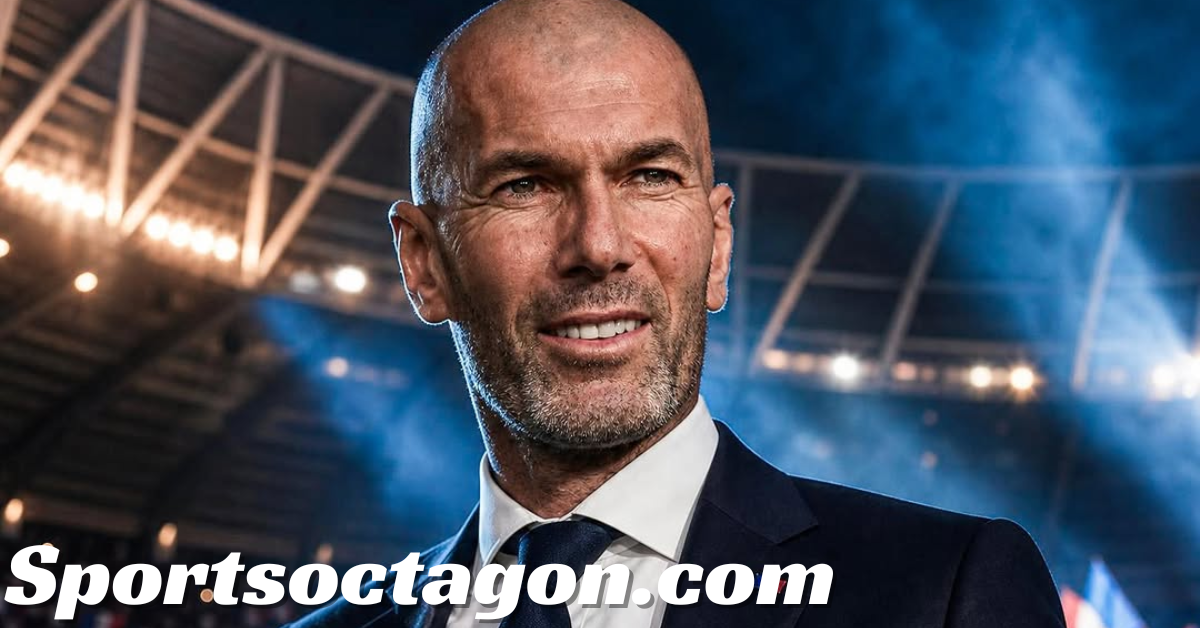
Zinedine Zidane is confirmed as the new France manager after Fabrizio Romano’s Here We Go. Zidane has agreed all terms and staff to succeed Didier Deschamps. The 53-year-old turned down Manchester United, PSG and multiple clubs since 2021 to wait for this one job.
Published: July 18, 2026 | Category: Football News | Author: Hemim SK
Zinedine Zidane is confirmed as the new France manager.
Fabrizio Romano‘s “Here We Go” broke it on July 17, 2026 — Zidane has agreed all terms and staff details to become the new head coach of the French national team. The formal contract will be signed in the coming days, after Didier Deschamps’ official farewell to the role he has held since 2012.
The announcement that French football has been building toward for five years is finally, officially, undeniably here.
But the news is not really about July 17, 2026. It is about what happened on every other day between May 2021 and today — every day Zinedine Zidane woke up as the most coveted unemployed manager in world football and said no to the biggest clubs and the biggest money the sport could offer, because the only thing he was waiting for was the one job that nobody else could give him.
The France shirt. His France shirt.
What Fabrizio Romano Confirmed
The Instagram post that the football world was waiting for arrived at 11pm on July 17 with the image that only means one thing in modern football — Zidane in a France suit, the French Football Federation crest on his lapel, the words “HERE WE GO” filling the bottom of the frame.
According to Romano, whose transfer reporting has been the most reliable source in football journalism for over a decade, Zidane said yes to the France project a long time ago and has been rejecting approaches from multiple clubs since December 2025 specifically to protect his availability for this appointment. The staff has already been agreed. The formal contract signature awaits only the completion of Deschamps’ official departure process after the 2026 World Cup.
View this post on Instagram
French Football Federation president Philippe Diallo, who had been carefully guarding the succession plan since early 2025, previously confirmed to Le Figaro: “Yes, I know his name.” He described the profile required for the job as someone who “commands national respect and can handle the unique pressure of the position” and noted that all applicants were French — because, as Diallo stressed, the French national team is the team of the French people, and only certain people understand what that means.
Only one person fitted every criterion without question. Only one person has been fitted for this role since the day his own playing career ended in the most dramatic and discussed moment in World Cup Final history — the headbutt against Marco Materazzi in Berlin 2006, France losing to Italy on penalties, Zidane walking off the Olympiastadion pitch for the last time as a player with the most complex possible farewell.
Twenty years later, he is coming back to the sport’s biggest stage as a manager. As the France manager.
The Five Years Nobody Could Buy
The story of how Zidane arrived at this appointment is as remarkable as the appointment itself — because it required him to do something that almost no manager in modern football does. He waited.
Zidane left Real Madrid for the second time in May 2021 having won two LaLiga titles, three consecutive Champions League titles in his first spell, and then returned to add a fourth Champions League in 2021/22 before the relationship ended. He was 48 years old. He had won more than almost any manager in history relative to his time in the job. The entire world expected him to walk straight into the next available position at the highest level.
He did not.
Manchester United approached him when Ole Gunnar Solskjaer was dismissed. Zidane said no. Paris Saint-Germain — the club that built a squad specifically around French stars and would have given him everything — made approaches at multiple points. Zidane said no. Saudi Arabian national team. No. Brazil. No. The Portugal job, after the Ronaldo era transition. No. Multiple Spanish clubs. No.
Five years of the most sought-after manager in football saying no to everything because the answer to France was always going to be yes, and he was not willing to risk the France appointment by being employed elsewhere at the wrong moment.
His own words, spoken at the Trento Sports Festival in November 2025, were the clearest possible statement of intent: “I’d like to be the head coach of the France team one day. I will surely return to coaching.” Not might. Not hoping. Surely. The certainty of a man who had already been told the answer and was simply waiting for the timing to align.
Romano confirmed that Zidane said yes to the France project “long time ago” — meaning the verbal understanding was already in place before the 2026 World Cup began, before France’s semi-final elimination against Spain, before Deschamps’ final press conference as France manager. The succession plan was complete. The only question was the paperwork.
Who Is Zinedine Zidane — For Those Who Need Reminding
Zidane is 53 years old. He was born in Marseille on June 23, 1972, to parents from Kabyle-speaking Algeria. His childhood in the Castellane neighbourhood of Marseille was not wealthy — a detail his story has never hidden, and a detail that gives his connection to France’s multicultural, diverse football culture a specific authenticity that the FFF president specifically described as important.
As a player, he won everything. The 1998 World Cup with France on home soil — scoring two headers in the final against Brazil in the match that a generation of French fans consider the greatest night in their football history. The 2000 European Championship. Three FIFA World Player of the Year awards. The Ballon d’Or in 1998. The Champions League with Real Madrid in 2002, scoring the goal against Bayer Leverkusen that is still regularly voted the greatest in Champions League Final history. Every individual honour the sport offers.
As a manager, he won three consecutive Champions League titles from 2016 to 2018 — a feat achieved by nobody else in the history of European football, including Sir Alex Ferguson, Pep Guardiola and every other manager the sport produces. He added a fourth in his second spell. Four Champions League titles as a manager. With one club. At one of the most difficult environments in world football to manage — where Galácticos, egos, press and political pressure combine in ways that consume most coaches within two years.
He left on his own terms, both times. That matters. It says something specific about Zidane as a person — that success does not change his understanding of when to leave, just as it never changed his understanding of when to join.
What Zidane Inherits — The France Squad After Deschamps
Deschamps is leaving France with one World Cup title (2018), three consecutive tournament semi-finals (2018, 2022, 2026), and a squad that is significantly younger than the side he took to Russia in 2018. Kylian Mbappé is 26 years old. Ousmane Dembélé is 29. William Saliba is 25. Theo Hernandez is 28. The generational talent that Deschamps assembled and refined across fourteen years does not disappear with his departure.
It passes to Zidane.
The immediate competitive programme includes the 2026/27 UEFA Nations League campaign and then qualification for the 2028 European Championships in the UK. The longer-term goal, which the FFF has already confirmed in general terms, is to lead France to the 2030 World Cup — to be hosted jointly by Spain, Portugal and Morocco, three nations with deep connections to France’s own football history.
Mbappé leading Zidane’s France into the 2030 World Cup. In Morocco. Against the backdrop of everything the Atlas Lions have built at consecutive World Cups. With Lamine Yamal across the pitch in a Spain side that just knocked France out of this World Cup. With England, rebuilt after their semi-final exit to Argentina. With Argentina, who may have Messi’s legacy but not Messi himself.
The 2030 World Cup, with Zidane in the France dugout, is already one of the most anticipated events in world football before a single qualification match has been played.
What This Means For French Football
France’s appointment of Zidane is not simply a managerial succession. It is a cultural statement. Zidane represents a specific vision of what French football can and should be — diverse, technically excellent, built on the academy system that has produced more world-class players per capita than almost any other nation on earth over the last thirty years.
FFF president Diallo’s criterion — a figure who “commands national respect and can handle the unique pressure of the position” — is an implicit acknowledgement that France’s national team exists at the intersection of sport and national identity in a way that few other teams in the world match. The French national team has generated political controversy, cultural pride and community celebration simultaneously across the period of its greatest success. Managing that complexity requires more than tactical intelligence.
It requires someone France recognises as its own. Not just a French passport. Not just a French surname. But someone who came from France, who carried France on his back at the 1998 World Cup on home soil, who scored two headers in the final against Brazil while 80,000 people sang his name, who made his mistakes in public and never ran from them, and who has spent five years in quiet, patient certainty that when France called, he would answer.
He has answered.
What Happens Next
Deschamps will complete his official farewell process following the 2026 World Cup. France face the third-place play-off against England on July 18 — the day after Romano’s confirmation — before the season concludes entirely. Deschamps will then be honoured by the FFF at a formal ceremony.
Zidane’s formal contract signing will follow. The announcement of his coaching staff — already agreed in principle, according to Romano — will come next. Then pre-season for the Nations League. Then the first training session. Then the first press conference as France head coach, which will be one of the most watched events in world football regardless of when it happens.
And somewhere in there, Zinedine Zidane will put on the France training kit for the first time as a manager. The same crest he wore as a player in 1998. The same colours. The same responsibility.
Five years of waiting. One job. Finally here.
Need To Know
Is Zinedine Zidane the new France manager?
Yes — Fabrizio Romano confirmed on July 17, 2026 with his signature “Here We Go” that Zinedine Zidane has agreed all terms and staff details to become the new France head coach, succeeding Didier Deschamps after the 2026 World Cup.
Why did Zidane wait so long to become France manager?
Zidane has been out of management since leaving Real Madrid in May 2021. He turned down multiple major club and international opportunities — including reported approaches from Manchester United, PSG and others — specifically to remain available for the France national team job.
When will Zidane officially sign his France contract?
According to Fabrizio Romano, Zidane will sign his formal contract in the coming days, after Didier Deschamps’ official goodbye process is completed following the 2026 World Cup.
What did Zidane win as a manager?
Zinedine Zidane won four UEFA Champions League titles as Real Madrid manager — three consecutively from 2016 to 2018 and a fourth in 2021/22. He also won one LaLiga title and multiple domestic cups during his two spells at the club.
What did Zidane win as a player with France?
Zinedine Zidane won the 1998 FIFA World Cup with France — scoring two headers in the final against Brazil — and the 2000 European Championship. He was the best player in the world during this period, winning the Ballon d’Or in 1998 and three FIFA World Player of the Year awards.
Who is Didier Deschamps and why is he leaving?
Didier Deschamps has been France’s manager since 2012 and confirmed in January 2025 that he would not extend beyond the 2026 World Cup. He led France to the 2018 World Cup title, the 2022 World Cup final and three consecutive tournament semi-finals. He is one of the most successful international managers in history.
What tournament will Zidane manage France at first?
Zidane is expected to lead France through the 2026/27 UEFA Nations League and then European Championship 2028 qualification, with the 2030 World Cup — co-hosted by Spain, Portugal and Morocco — as the headline long-term target.
Conclusion
Zinedine Zidane is the new France manager. The “Here We Go” has arrived. The five years of patience, of saying no to Manchester United, no to PSG, no to every offer that was not the France shirt — they have led here.
He will sign the contract this week. He will meet his squad in the autumn. He will stand in a France dugout, in France colours, and begin the next chapter of a story that started in 1994 when he made his international debut and has never really ended.
The man who scored two headers in the 1998 World Cup Final. The man who won three consecutive Champions League titles. The man who walked off the Berlin pitch in 2006 and has spent twenty years proving that football gives second chapters to those who wait for them.
Zidane is the France manager. Here we go.
Read next: World Cup 2026 Final Preview — Spain vs Argentina at MetLife Stadium July 19
Related: France 0-2 Spain — Semi-Final Match Report
Is Zidane the perfect appointment for France — and what would a Zidane-managed France vs Yamal’s Spain look like in 2028 or 2030? Tell us in the comments below